
SERVING PINELLAS COUNTY, FLORIDA
Gulf Coast pavers. Built for salt, sun, and sandy soil.
Professional paver installation, sealing, repair & cleaning across St. Petersburg, Clearwater, Largo, Palm Harbor, Tarpon Springs, and all of Pinellas County.
OUR STANDARD
St. Petersburg and Clearwater homeowners deserve better than builder concrete.
Pinellas County is Florida's most densely populated county — a 280-square-mile peninsula with some of the highest property values and most unforgiving coastal climate in the state. The Gulf to your west, Tampa Bay to your east, and sandy, salt-saturated soil beneath your feet. Standard concrete crumbles here faster than almost anywhere else in the Tampa Bay region. Pavers — installed correctly, with proper base depth, geotextile fabric, and solid edge restraint — hold up against Pinellas County's shallow water tables, coastal groundwater, and relentless salt air in ways poured concrete simply can't.
We've worked in St. Pete's historic Kenwood and Crescent Lake neighborhoods, in the beach communities from Tarpon Springs to Tierra Verde, in Clearwater's golf-course corridors, and in nearly every zip code in between. We know what Pinellas County soil does to a bad install — and we know exactly how to prevent it.
WHAT WE CREATE
Driveways, pool decks, and patios built for Pinellas County.
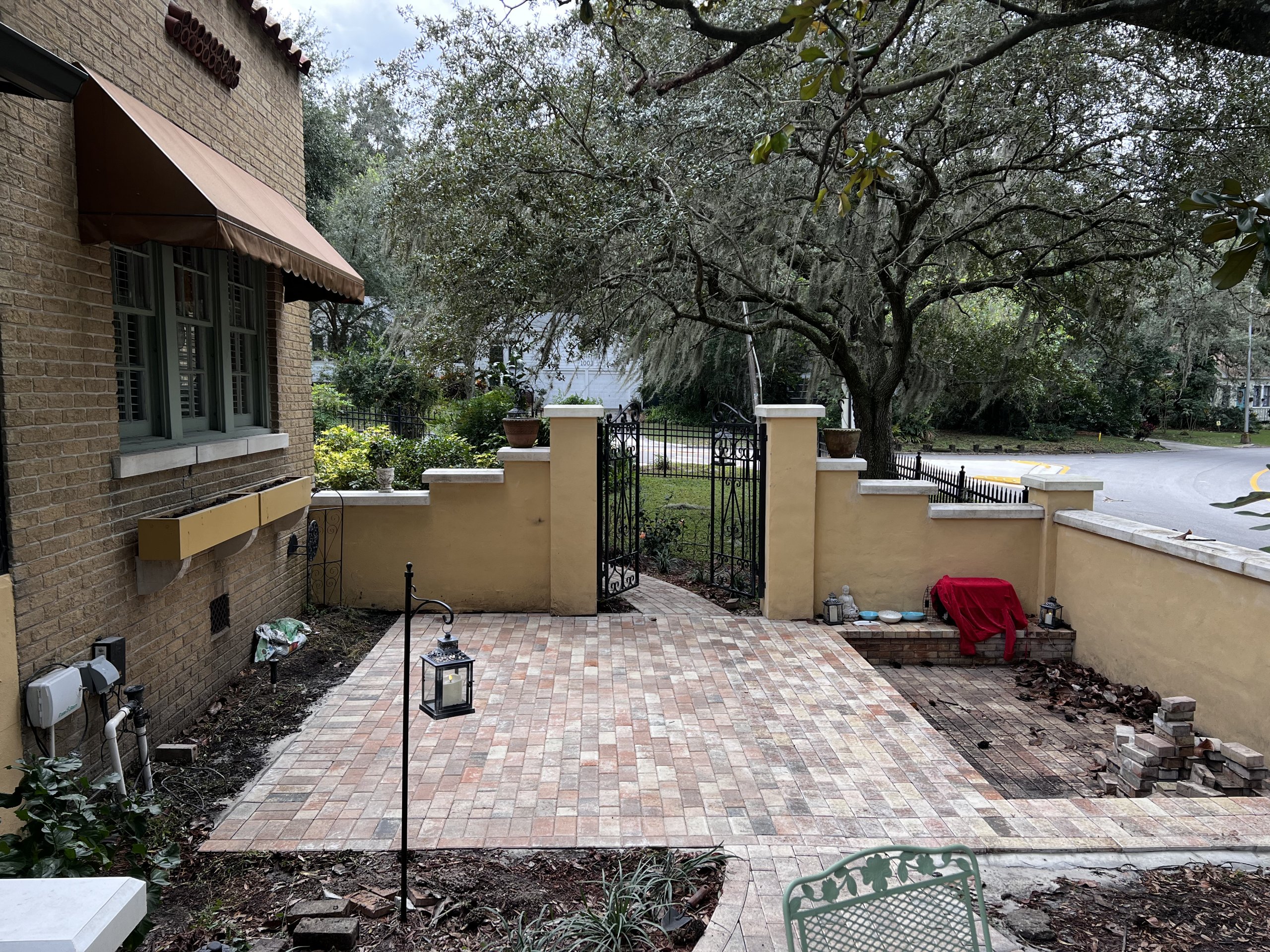
Paver Installation
A new driveway, patio, or pool deck — engineered for Florida soil and built to last decades.
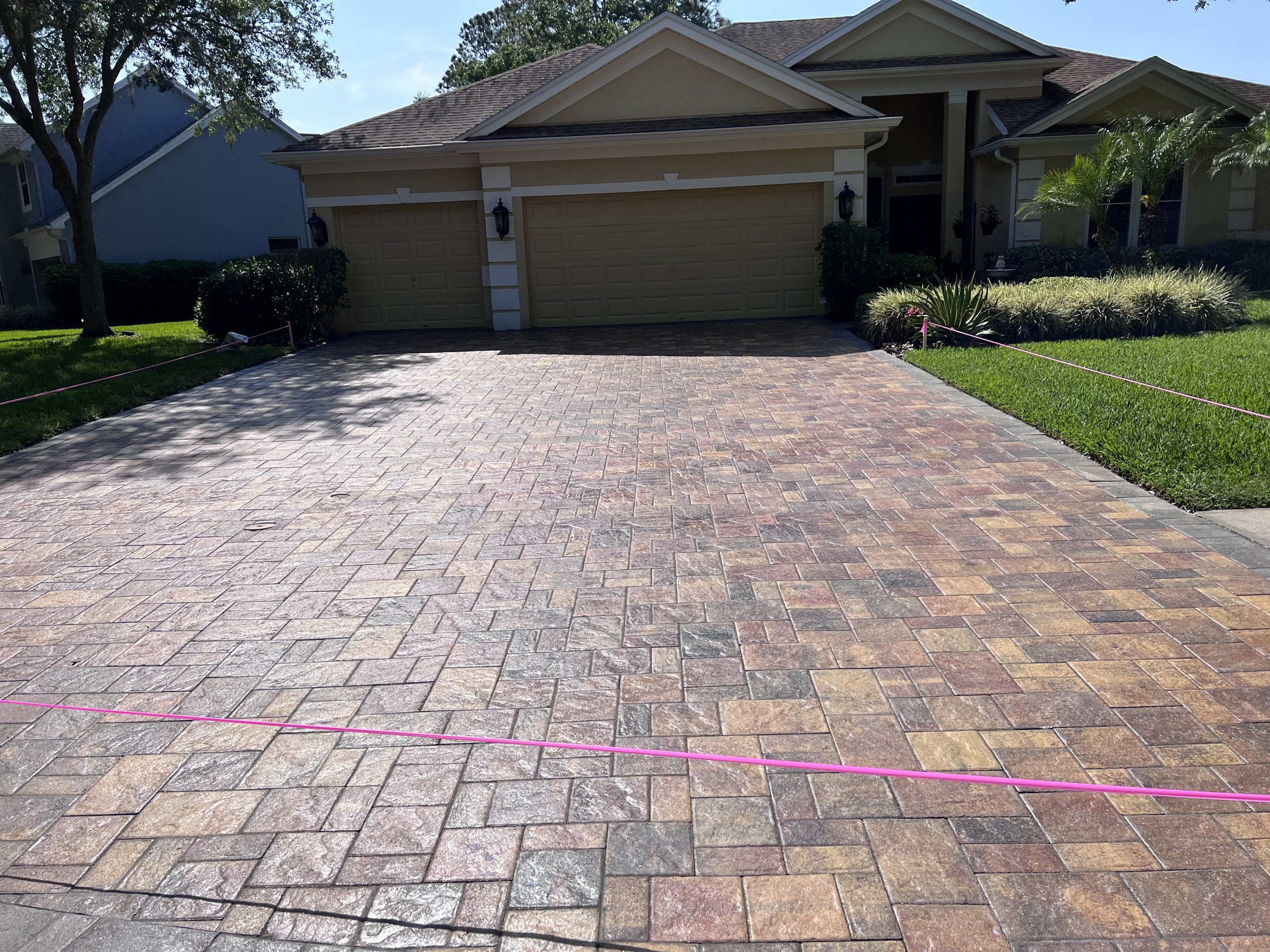
Paver Sealing
Protect your pavers from Pinellas County's salt air, UV exposure, staining, and Florida's Gulf-coast humidity year-round.

Paver Repair
Fix sunken pavers, cracked joints, and shifted edges without a full tear-out when repair is the right call.
Also offering paver cleaning & restoration across all of Pinellas County. Contact us for a free estimate.
From St. Pete to Dunedin. One standard across every Pinellas neighborhood.
Pinellas County's dual coastline means every project demands salt-air prep, proper base depth, and materials built for humidity and rain. Whether you're in Clearwater, Largo, Tarpon Springs, or Tierra Verde — we bring the same craftsmanship to every job across the entire peninsula.
WHY PINELLAS COUNTY
Peninsula soil, Gulf-side humidity, and coastal salt air — we've built for all of it.
It's not just the salt air — though that's significant. Pinellas County's sandy, low-bearing-capacity soil requires a different installation approach than the clay-heavy inland counties further north. We increase base depth, use geotextile fabric to separate base from subgrade, and apply penetrating sealers rated for coastal exposure. The result is a paver installation that holds its shape, retains its color, and doesn't sink or shift in the first five Florida rainy seasons. We also work regularly in Pinellas County's many active adult and HOA communities — Belleair, Palm Harbor, Safety Harbor — where community standards require pavers that look as good in year ten as they did on day one. We seal with the right product, sand the joints correctly, and don't cut corners on base prep just because the homeowner can't see it.
FREQUENTLY ASKED QUESTIONS
Questions about pavers in Pinellas County?
Pinellas County has sandy coastal soil — does that affect paver installation depth or base prep?
Yes — significantly. Pinellas sits on a narrow peninsula with shallow water tables and predominantly sandy fill soil, especially in the beach communities and low-lying neighborhoods. That soil provides very little natural load-bearing capacity. We counter this with deeper aggregate base — typically 6–8 inches of compacted limerock and road base versus a standard 4-inch — combined with geotextile fabric to prevent sand migration under the base. Proper edge restraint is equally critical. This is not standard procedure for every contractor, but it's mandatory for a paver installation that holds in Pinellas County's coastal ground.
We live in Madeira Beach, Treasure Island, or St. Pete Beach — how does salt air affect pavers long-term?
Salt air causes two problems for unprotected pavers: surface staining and efflorescence, and deterioration of polymeric sand in the joints. Unsealed pavers in Gulf-front and bay-front locations will develop a salt-white film, lose color faster, and lose joint sand after heavy rain or beach weather. We address this with a penetrating, UV-resistant sealer rated for coastal exposure and fresh polymeric sand before sealing. For beach community properties, we recommend re-sealing every 2–3 years versus the standard 3–4, given the constant salt exposure.
Our St. Petersburg home has a 1960s concrete driveway that's cracked and sinking — what are our options?
St. Pete's mid-century housing stock — largely built in the 1950s through 1970s — is now 50 to 70 years old, and original concrete driveways and walks are showing it. Depending on severity, you have two paths: paver overlay (setting pavers on sound concrete that's stable but cosmetically damaged) or full tear-out (removing the slab, prepping the base properly, and installing fresh pavers from scratch). We inspect every driveway individually before recommending one or the other. If the existing slab is moving or has significant voids beneath it, tear-out is the right call. We'll be straight with you about which one you actually need.
Do you work in Tarpon Springs' historic neighborhoods and Dunedin's downtown district?
Yes — and we enjoy both. Tarpon Springs has a distinct Greek architectural heritage, and many homeowners there want paver styles that complement Mediterranean and Mediterranean Revival homes — travertine, tumbled concrete, or natural stone finishes. Dunedin's homes tend toward bungalow and cottage styles where a classic running bond or herringbone in a warm buff or charcoal tone looks exceptional. Both areas have active neighborhoods where curb appeal matters. We bring the same material quality and installation standard to historic Tarpon Springs and Dunedin's corridor as we do anywhere in Pinellas County.
We're in Belleair, Palm Harbor, or Safety Harbor with HOA requirements — what paver styles do you recommend?
HOAs in Belleair, Palm Harbor, and Safety Harbor typically require neutral tones (sand, buff, charcoal, blends), standard rectangular or square shapes, and consistent joint width. Most prohibit high-contrast patterns or overly decorative borders. Within those guidelines there's still room for a premium look: a 4x8 or 6x6 running bond in a three-color blend, a field-and-border design in complementary tones, or a cobblestone pattern in 6x9 for a more upscale finish. We've worked with enough Pinellas County HOAs to know what gets approved quickly versus what triggers revision requests. We'll help you pick a pattern that clears your HOA and genuinely improves your home's appearance.
Ready to upgrade your Pinellas County outdoor space?
Free estimates across all of Pinellas County — St. Pete, Clearwater, Largo, Palm Harbor, and the beach communities. No travel fees within our service area.